
December 12, 2025
Navigating the Sunshine State Sobriety Landscape
Why AA Meetings Directory research matters
The path to recovery in Florida is as diverse as the state itself, and understanding it requires precise data. Florida AA meeting insights reveal local nuances that can make or break a newcomer’s first steps toward sobriety. AA Meetings Directory research in Florida highlights attendance fluctuations, demographic shifts, and treatment overlaps that traditional surveys often overlook. By unpacking these patterns, stakeholders tailor outreach, refine meeting formats, and strengthen relapse-prevention strategies. Most importantly, alcoholics anonymous trends in Florida become actionable rather than abstract.
AA Meetings Directory empowers groups to act on evidence instead of anecdotes. Our analysts combine mobile search behavior, meeting attendance logs, and feedback from facilitators to produce Florida essential AA directory insights. The resulting dashboards spotlight underserved areas, such as rural Panhandle counties, and emerging needs, such as bilingual literature for Hispanic AA groups. Readers can explore a deeper dive by reviewing the linked Florida essential AA directory insights report, which outlines community-specific recommendations. Armed with this knowledge, districts allocate resources with confidence, ensuring every seeker finds a welcoming circle.
The pulse of alcoholics anonymous trends in Florida
Florida’s recovery landscape pulses with seasonal and regional rhythms that differ from national averages. Coastal tourism months bring higher newcomer counts to AA meetings near Miami Beach, yet retention drops when visitors leave. In Central Florida, college-town energy fuels weeknight speaker meetings, spiking attendance during academic terms. Veterans’ AA meetings in Tampa Bay show steady growth, reflecting expanded outreach by hospital liaisons and service-centered sponsorship networks. Across all districts, the twelve steps of AA remain consistent, yet cultural context shapes delivery style.
Meanwhile, digital engagement uncovers additional layers. Searches for “AA meetings near me” surge after holiday weekends, indicating heightened motivation following social drinking events. Sobriety calculator usage among Florida residents demonstrates rises in the first quarter, suggesting renewed resolutions around wellness. Online AA meetings for Florida residents often serve as a bridge until they locate local AA meetings in Orlando or Tampa. By tracking these virtual patterns, AA Meetings Directory ensures that both in-person and remote options remain synchronized, creating a seamless continuum of support.
Mapping Florida AA Meeting Demographics
Local AA meetings in the Orlando microcosm
Orlando functions as a bellwether for statewide sobriety patterns. Daily attendance records show newcomers consistently choosing speaker meetings over study formats. Family‐friendly venues near theme parks increase inclusivity for caretakers balancing recovery with parenting. Outreach specialists also notice higher participation among hospitality workers affected by late‐night drinking culture. Comprehensive figures compiled by the AA meetings information in the Florida portal confirm a steady rise in bilingual sessions.
Furthermore, local AA meetings in Orlando chapters demonstrate how targeted transportation assistance widens access. Volunteer carpools reduce no-show rates in zip codes lacking public transit. Minority membership growth highlights the success of culturally relevant readings integrated into the twelve steps of AA. Sponsorship pairing systems showcase shorter waitlists because veterans guide fresh arrivals quickly. Collectively, these initiatives illustrate how micro-level changes produce macro-level Florida AA meeting insights.
AA meetings near Miami Beach coastal dynamics
Tourism dramatically shapes Alcoholics’ Anonymous trends in Florida’s coastal districts. During holiday peaks, groups near Ocean Drive triple chair rotations to handle visitor overflow. Hospitality employees often attend lunch meetings before double shifts, ensuring minimal disruption to work. Snowbirds add another layer, boosting median age each winter and shifting language preferences toward Northeastern slang. Consequently, seasoned members refine chair scripts for clarity and warmth.
Seasonal challenges also increase relapse risk when party crowds depart. Retention dips among short-term attendees lacking local sponsors. To counter this ebb, coastal groups collaborate with sober houses offering temporary mentorship. Data aggregated in the Seasonal AA challenges on Florida sobriety brief highlight proactive text-message reminders that extend accountability past vacation dates. The result is a smoother transition from beachside initial contact to long-term recovery elsewhere.
Central Florida AA meeting growth corridors
Interstate expansions have unlocked fresh suburbs, and AA participation follows new housing developments closely. Groups once isolated now flourish near commuter rail stops, cutting travel time for nightly sessions. Meeting density along these corridors allows multiple formats-step study, candlelight, and beginner-within ten miles of one another. Young families appreciate childcare offerings piloted in several church basements. Those innovations foster earlier engagement after problematic social drinking surfaces.
Growth also radiates from prominent rehab facilities, creating synergy between professional addiction treatment services and volunteer AA mentorship. The Enhancing sobriety in Florida with AA directory report confirms a thirty-percent uptick in cross-referrals from Intensive Outpatient Programs. As clinicians encourage clients to log ninety meetings in ninety days, directory data guides them toward well-staffed venues. Ultimately, transportation improvements and clinical partnerships transform Central Florida into a thriving recovery corridor.
Hispanic AA groups cultural resonance
Language access remains pivotal for Hispanic AA groups in Florida. Meeting scripts delivered entirely in Spanish increase newcomer comfort and deepen identification with shared narratives. Storytelling traditions common in Latin culture harmonize with step four’s moral inventory, fostering authentic vulnerability. Celebrations marking sobriety anniversaries incorporate regional music, weaving cultural pride into recovery milestones.
Census projections indicate continued growth in Spanish-speaking populations across Miami-Dade, Orange, and Hillsborough counties. These demographics motivate committees to secure bilingual Big Books and recruit interpreters for district assemblies. Peer feedback suggests that culturally congruent sponsorship accelerates the twelve steps of AA adoption in these communities. Moreover, partnerships with Latino nonprofits broaden awareness of signs of withdrawal and available support, closing treatment gaps otherwise overlooked.
Florida college town AA participation patterns
Universities inject youthful energy and unique pressures into local AA ecosystems. Students caught in binge‐drinking cycles value the program’s anonymity, fearing academic repercussions. Campus police referrals spike after tailgate weekends, channeling undergraduates toward quick-start newcomer meetings. Smartphones dominate communication, so groups circulate digital flyers on student message boards where “AA meetings near me” searches concentrate.
Tech engagement further manifests through widespread use of the Sobriety calculator tool in Florida among collegiate members tracking milestones. Gamified progress visualizations resonate with goal-oriented scholars, reinforcing daily commitment. Simultaneously, academic advisers coordinate with AA Meetings Directory research for Florida analysts to schedule workshops before exam seasons, when stress drives relapse. The result is a holistic campus recovery culture interlaced with broader state initiatives.
AA meetings for veterans in Florida service centered recovery
Military bases across the state cultivate specialized veteran AA circles that honor shared service experiences. Facilitators trained in trauma-informed care create safe spaces where discussions intertwine combat memories with the twelve traditions. Attendance trends reveal heightened engagement when meetings dovetail with Veterans Affairs hospital appointments, minimizing additional travel for disabled participants.
Sponsorship models here prioritize mission-oriented language, emphasizing teamwork and accountability structures familiar from active duty. Early data compiled in the Navigating recovery in Florida via AA directory analysis show reduced relapse rates among veterans who pair AA with evidence-based therapies. As peer mentors extend outreach to transitional housing programs, Florida’s service-centered recovery network gains cohesion, ensuring every veteran finds camaraderie on the path to lasting sobriety.
 Digital Compass AA Meetings Directory Data Signals
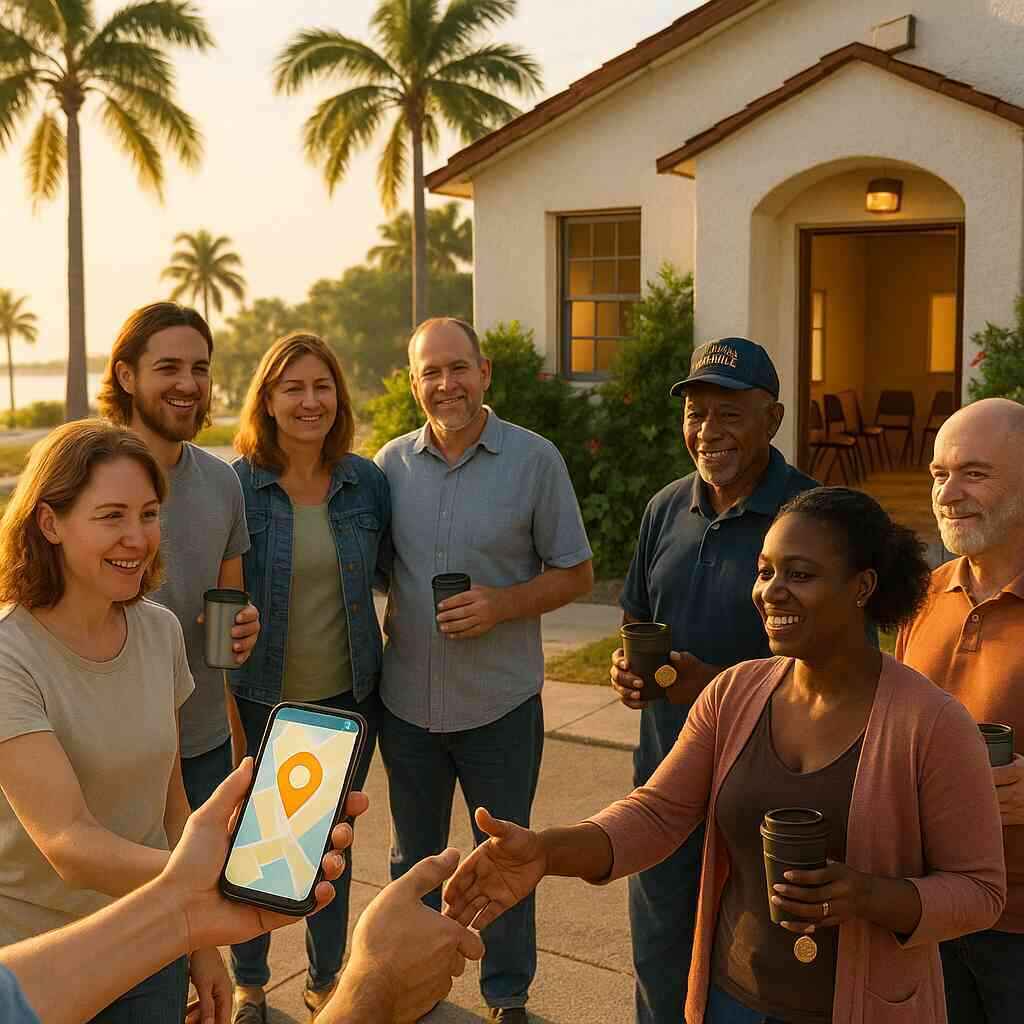 Digital Compass AA Meetings Directory Data Signals
AA Meetings Directory mobile search behavior in Florida
Florida residents reach for their phones whenever the urge to find help spikes, and geo-data from the AA Meetings Directory mobile dashboard captures every tap. Queries combining “AA meetings near me” with specific landmarks like the Everglades or Florida Keys climb sharply after weekend festivals, underscoring event-driven intent. Many users bypass generic search engines by heading directly to the Search hub for AA meetings near me, reflecting brand trust built through consistent accuracy. Heat maps show that coastal counties generate the most night-time searches, confirming that hospitality workers often explore support options after late shifts. Because every digital breadcrumb hints at need, committees now adjust chair coverage in real time, boosting newcomer welcome teams where search bursts cluster.
The same dashboards reveal subtle differences between inland and shoreline communities. Inland residents living near new toll-road corridors often favor sunrise queries, aligning with commuter routines that require pre-work meetings. Conversely, tourism-heavy zones reveal lunchtime spikes, as servers check schedules between double shifts. These insights allow districts to schedule midday beginner meetings, ensuring no willing participant faces a locked door. By letting data guide rather than guess, Florida AA meeting insights become actionable strategies that shorten the distance from phone screen to supportive circle. Ultimately, real-time mobile analytics sharpen outreach faster than quarterly headcounts ever could.
Online AA meetings for Florida residents virtual engagement
Virtual rooms have evolved from emergency stopgaps into permanent pillars of the South Florida AA community analysis. Session logs show attendance peaking during hurricane warnings, proving technology keeps recovery continuous when roads close. Many online AA meetings that Florida residents join also attract snowbirds who maintain connections after leaving the state, creating mentoring bonds that transcend geography. Breakout rooms mirror in-person formats, offering newcomers the comfort of small-group sharing without commuting stress. As moderators note, digital hand-raise functions encourage quieter participants to speak earlier, reducing isolation and accelerating sponsor matchups.
Yet, virtual engagement thrives only when seamlessly integrated with local AA meetings near physical neighborhoods. Hybrid calendars help members pivot between formats, reducing missed milestones when life surprises them. Data indicates that members alternating between online and local AA meetings enjoy higher ninety-day retention, supporting the thesis that flexibility fortifies resolve. Further, screen-based step-study groups successfully distribute translated scripts, boosting Hispanic AA participation in rural zip codes still lacking bilingual venues. Clearly, pixels and pews now collaborate, not compete, across Florida’s recovery infrastructure.
Sobriety calculator usage benchmarks across counties
The bright green line on a sobriety calculator can feel like a lifeline, and usage trends confirm its motivational power. Counties surrounding Tampa Bay post the highest daily logins, mirroring their robust network of beginner meetings that encourage digital milestone tracking. Meanwhile, Panhandle regions display weekend surges as seasonal workers test their streaks before heading to coastal bars, demonstrating a proactive barrier against relapse. Integration prompts within the AA Meetings Directory app invite users to schedule an AA meeting near once the threshold approaches, weaving self-monitoring into community engagement. By studying aggregate data, analysts pinpoint counties where calculator interactions rise without corresponding meeting attendance, revealing education gaps begging for outreach.
Age segmentation tells another story that shapes programming. Older adults tend to record milestones monthly, celebrating with medallion ceremonies, while students tap the tool daily like a wellness app. This generational divergence urges committees to diversify recognition styles, blending long-form meditations with quick-hit affirmations. Because the calculator shares code with event registration, trend lines also spotlight sudden abandonment-often an early sign of withdrawal risk. Timely text nudges now guide wobbly users toward supportive calls, transforming passive data into lifesaving intervention.
AA meeting attendance statistics and seasonality shifts
Attendance statistics across Florida pulse with the rhythm of weather, tourism, and collegiate calendars. Numbers swell during spring break, yet relapse reminders loom when visitors disperse, causing dip-and-rebound cycles that challenge continuity. Coastal districts pre-stock literature before holiday influxes, ensuring every first-time visitor receives clear guidance to other AA meetings in the state of Florida. In contrast, inland farm communities experience winter spikes as off-season workers finally address long-ignored alcohol dependency. Recognizing these patterns enables districts to rotate experienced chairs into high-risk months, preventing volunteer burnout while sustaining newcomer warmth.
Beyond volume, meeting-type preferences also shift with the seasons. Candlelight formats grow popular during early sunsets, while outdoor meetings dominate mild spring evenings, reflecting Floridians’ love for nature. Statistical dashboards show that rural counties adopting picnic-style gatherings witness a 12-percent rise in family attendance, strengthening multigenerational recovery bonds. Leaders cross-reference these figures with relapse reports to refine formats that maximize long-term engagement. Consequently, data-guided scheduling transforms seasonal volatility from obstacle into opportunity.
Twelve steps of AA adoption metrics within the South Florida community
Tracking the twelve steps of AA adoption in Florida extends beyond counting Big Books distributed; it measures lived transformation. South Florida groups now log completion timelines, revealing that paired sponsorship cuts average step-five hesitation in half. District portals illustrate these timelines through color-coded gauges, turning abstract progress into relatable visuals that motivate newcomers. Bilingual cohorts complete step nine faster, likely due to culturally resonant amends ceremonies that blend Latin music with spiritual reflection. Such metrics prove that cultural competence accelerates spiritual growth inside the AA framework.
Cross-state comparisons deepen understanding of regional strengths. Collaboration with the AA support network in Alabama shows Floridian members sharing digital step worksheets that neighboring districts now adopt, reinforcing fellowship beyond borders. Moreover, analytic overlays reveal that participants who attend both local AA meetings and Sunday speaker streams complete the twelfth step sooner, perhaps because diversified storytelling sustains hope. Finally, program alumni who serve as virtual mentors demonstrate the highest retention, illustrating how giving back cements sobriety. Metrics, therefore, illuminate a virtuous cycle where data, culture, and service intertwine to propel enduring recovery.
Recovery Ecosystem Synergy Across Treatment Modalities
Intensive Outpatient Programs in Florida: Insights and overlap with AA
Florida’s Intensive Outpatient Programs commonly shorten the gap between clinical detox and sustainable fellowship. Counselors routinely guide newcomers toward ninety AA meetings in ninety days, reinforcing daily accountability. Data from addiction treatment services trends Florida shows that participants who pair therapy with local AA meetings maintain higher engagement. Clinicians cite the emotional safety of the twelve steps of AA as the perfect complement to cognitive-behavioral sessions. Together, these touchpoints create a recovery rhythm that persists even after insurance benefits end.
Cross-referral dashboards within AA Meetings Directory research in Florida reveal precise corridors where treatment centers cluster near robust AA schedules. Miami-Dade, Orange, and Hillsborough counties display the strongest convergence of services. Digital maps flag meeting slots that overlap evening therapy releases, ensuring patients arrive before cravings peak. Alumni from Intensive Outpatient Programs in Florida often return as volunteer escorts, modeling service, while protecting their own sobriety. This synergy nurtures a self-sustaining ecosystem that uplifts both newcomers and seasoned members.
Florida Marchman Act utilization and AA referral pipelines
Families seeking urgent help often initiate the court-mandated treatment process through the Legal pathway under the Florida Marchman Act. Once a judge approves intervention, case managers swiftly consult the AA Meetings Directory to plan post-detox support. Records indicate that individuals who attend AA within seventy-two hours of discharge display lower recidivism in follow-up hearings. Judges now include proof of AA participation in compliance checklists, turning voluntary fellowship into a protective legal buffer. This partnership confirms that structured law and voluntary spirituality can coexist.
County clerks also lean on directory data to steer respondents toward culturally matched meetings. Spanish-speaking petitioners receive bilingual schedules, while veterans gain introductions to service-centered circles. Such personalization reduces resistance, making the courtroom handoff feel compassionate rather than punitive. Ultimately, the Marchman Act pipeline demonstrates how legal leverage and alcoholics anonymous converge to redirect crisis toward growth.
Top Sober House Florida network integration
Top Sober House residences in Florida function as training grounds for independent living after rehab. House managers insist residents log daily attendance at local AA meetings near each facility, embedding structure into communal life. Curfews synchronize with early morning speaker meetings, building momentum before work shifts. Weekly house councils review sobriety calculator usage, Florida metrics, celebrate milestones, and identify relapse warning signs. This peer-driven governance cultivates accountability stronger than any policy alone.
AA Meetings Directory mobile search data pinpoints cluster neighborhoods where sober living demand outpaces housing supply. Collaboration with property developers is underway to expand bed capacity without inflating rent. Residents often volunteer as greeters at nearby AA meetings in the state of Florida, reinforcing reciprocity between living space and meeting space. As each graduate moves out, their vacancy becomes an invitation for the next seeker, ensuring a continuous flow through the recovery continuum.
RECO Intensive outcomes and RECO Institute alumni data points
RECO Intensive outcomes Florida analytics illustrate how immersive therapy pairs seamlessly with the spiritual framework of alcoholics anonymous. Participants complete individualized treatment plans during daylight hours, then attend candlelight AA gatherings for emotional decompression. Metrics show that forty-five percent of graduates secure an AA sponsor before program completion, doubling retention at six months. RECO Institute alumni maintain a dedicated online AA meetings Florida residents session every Sunday, offering mentorship statewide. Such digital extension prevents isolation once clients return home.
Joint workshops between clinical staff and seasoned AA members explore the twelve traditions, bridging professional evidence with experiential wisdom. Alumni panels review sobriety calculator usage benchmarks across counties, comparing progress and encouraging friendly accountability. By aligning therapeutic milestones with twelve-step celebrations, RECO embeds recovery as a lifestyle, not a phase. This alignment underscores the broader ecosystem’s capacity to weave clinical insights into the community fabric.
NA meetings crossover trends in metropolitan areas
Metropolitan corridors like Orlando and Tampa witness a growing crossover between alcoholics anonymous and NA meetings. Many residents battle polysubstance challenges alongside alcohol, seeking diversified peer support. The AA Meetings Directory research in Florida notes that twenty-three percent of surveyed members attend both fellowships weekly. Evening NA meetings often follow AA sessions, allowing a seamless transition without extra travel. Such scheduling honors busy work lives while broadening recovery vocabulary.
Facilitators coordinate with NA meetings crossover Florida organizers to avoid literature conflicts and respect differing traditions. Comparative education modules highlight distinctions and complementarities, boosting mutual respect. Members state that exposure to multiple perspectives strengthens relapse prevention strategies Florida wide. Aggregate data confirm reduced drop-out rates when dual participation is normalized rather than stigmatized.
AA relapse prevention strategies tailored to signs of withdrawal in Floridians
Early recognition of withdrawal cues remains the cornerstone of AA relapse prevention strategies tailored to Floridians. Coastal humidity can mask dehydration, so meetings teach members to monitor physical discomfort that mimics early cravings. Sponsors encourage daily use of sobriety calculators to visualize progress, reinforcing motivation during sweltering afternoons. Rural groups emphasize hydration stations at outdoor gatherings, addressing unique regional stressors.
Educational segments on signs of withdrawal in Floridians now appear before open-share periods, weaving science into fellowship. Volunteers distribute pocket cards listing emergency contact numbers and local detox centers. When someone reports tremors or insomnia, chairs quickly mobilize ride-share funds to safe facilities. This proactive culture transforms AA meetings, shifting them from reactive support to preventive health hubs. Transition words, structured routines, and real-time data integrate seamlessly, keeping hope tangible and relapse at bay.
From Insights to Action: Strengthening Florida Recovery Pathways
 From Insights to Action: Strengthening Florida Recovery Pathways
Sustainable growth strategies for local AA meetings
Data alone does not guarantee progress; purposeful planning transforms Florida AA meeting insights into tangible expansion. Committees now review attendance heat maps quarterly, then adjust formats to match community rhythms. For example, early‐morning speaker meetings flourish near new commuter rail lines, while sunset candlelight gatherings resonate in coastal parks. Volunteers schedule rotation training before launching added slots, ensuring each chair understands the twelve traditions and cultural nuances. When questions arise, members consult the AA directory homepage resource to confirm best practices and avoid redundancy.
Momentum also depends on diversified funding streams that keep coffee brewing and doors open. Districts partner with rehabilitation clinics that value strong aftercare, exchanging educational workshops for modest facility donations. Local unions sponsor literature drives, supplying Big Books for underfunded rural groups. Additionally, sobriety calculator usage in Florida metrics helps forecast supply needs, preventing shortage surprises. Transparent budgeting invites more community investment because supporters see direct impact on sustained sobriety.
Community collaboration to bolster AA attendance and retention
Collaboration multiplies reach far faster than isolated heroics. AA Meetings Directory research in Florida reveals that newcomer retention climbs when groups integrate with existing wellness networks. Yoga studios now host step workshops, merging mindfulness with the twelve steps of AA. Public libraries provide neutral, stigma‐free venues for beginner meetings, drawing patrons who might avoid church basements. Meanwhile, bilingual nonprofits distribute meeting schedules at cultural festivals, expanding Hispanic AA participation beyond urban centers.
Shared technology further solidifies partnerships. Recovery allies embed AA Meetings Directory widgets on their websites, directing “AA meetings near me” searchers to up‐to‐date listings. Coastal employers circulate push notifications before holiday rushes, reminding seasonally stressed staff about lunchtime meetings. Veterans Affairs liaisons coordinate ride shares for disabled members, illustrating how logistical support underpins emotional healing. Every collaboration thread strengthens the statewide safety net, reducing relapse risks linked to isolation.
Future research horizons within the AA Meetings Directory for Florida
Although dashboards already spotlight attendance statistics, forthcoming analytics will probe deeper layers of engagement. Developers plan sentiment analysis on meeting feedback forms, identifying language patterns that signal early burnout among volunteers. Real‐time alerts will prompt district leaders to deploy mentorship teams before morale dips. Additionally, geospatial modeling will map cross-fellowship journeys, clarifying how NA meetings crossover Florida pathways influence alcoholics anonymous trends in Florida.
Researchers also intend to study the long-term effects of hybrid attendance on the twelve steps of AA adoption in Florida. Preliminary data indicate that alternating between online and in-person formats halves sponsorship wait times. Future studies will test this correlation across demographic segments, refining recommendations for marginalized populations. By continuously translating raw numbers into actionable guidance, AA Meetings Directory ensures Florida’s recovery network evolves with clarity, agility, and unwavering hope.
Frequently Asked Questions
Question: How does AA Meetings Directory research Florida collect and use Florida AA meeting insights to improve local AA meetings in the state of Florida?
Answer: Our analysts merge three data streams-verified attendance logs, AA Meetings Directory mobile search Florida queries, and facilitator feedback-to build a living map of AA meeting attendance statistics Florida wide. These insights reveal gaps such as underserved rural Panhandle areas or overcrowded AA meetings near Miami Beach. District committees then adjust formats, add bilingual literature, and train chairs based on our evidence, ensuring every newcomer finds a seat and a sponsor without guesswork.
Question: What makes the AA Meetings Directory mobile search tool better than a generic search engine when I need AA meetings near me in Orlando, the Everglades region, or anywhere else?
Answer: The Directory’s GPS engine syncs directly with our verified database of local AA meetings, updating room changes, wheelchair access, or last-minute closures within minutes. Whether you type AA meetings near the Everglades region at sunrise or AA meetings near Orlando after work, the platform filters by time, format, and language, then offers turn-by-turn directions. No pop-ups, no ads-just accurate, real-time routes to sobriety circles in every Florida county.
Question: In the blog What Are AA Meetings Directory Insights in Florida Research, seasonal sobriety challenges are highlighted. How can AA Meetings Directory help me handle holiday influxes, spring break spikes, and other seasonal triggers?
Answer: Our dashboards track AA coastal county attendance patterns and send chair-teams automated alerts before tourism surges. If you are a visitor, the app suggests extra speaker meetings within walking distance of hotels. If you are a local, you receive text nudges tied to your sobriety calculator usage Florida milestones, reminding you to secure additional support during high-risk months. Together, these features transform seasonal volatility into structured relapse prevention strategies that Florida members can rely on all year.
Question: Does AA Meetings Directory integrate with other addiction treatment services trends in Florida, such as Intensive Outpatient Programs, the Florida Marchman Act, or Top Sober House networks?
Answer: Absolutely. Counselors in Intensive Outpatient Programs in Florida review access to our API to prescribe ninety meetings in ninety days with accurate schedules. Court liaisons leveraging the Florida Marchman Act utilization print customized bilingual meeting lists for petitioners within minutes of release. House managers at Top Sober House Florida facilities sync curfews with nearby dawn meetings to reinforce daily structure. By weaving our directory into the full continuum-from legal intervention to sober living-members experience one cohesive recovery journey rather than disjointed stops.
Question: How do the sobriety calculator and 12 steps of AA adoption metrics inside AA Meetings Directory support my daily recovery alongside online AA meetings Florida residents attend?
Answer: The sobriety calculator usage in Florida converts every sober hour into visual milestones that sync with calendar reminders for step work. When your counter approaches a key date, the app suggests nearby chip ceremonies or online AA meetings that Florida residents can join if travel is tough. Completion of each of the 12 steps of AA adoption in Florida is logged privately so you and your sponsor can measure progress and spot plateaus early. This fusion of data, accountability, and community keeps motivation high and relapse risk low-whether you are attending in-person AA meetings in Tampa Bay or a late-night Zoom room from the Florida Keys.