
January 1, 2026
Opening the Keystone to Recovery
Why AA Meetings Directory resonates with Pennsylvanians in search of local AA meetings
Pennsylvanians searching for reliable guidance often start by typing “find AA meetings near me in PA” into a browser. The AA Meetings Directory Pennsylvania portal immediately answers that intent, displaying up-to-date schedules for AA Meetings in Pennsylvania that stretch from Erie’s lakeshore to the streets of Philadelphia. Residents see accurate listings, clear driving directions, and contact information that demystifies the first step toward recovery. Because the platform aligns with the trusted 12 steps of AA, newcomers sense a familiar structure blended with twenty-first-century convenience. This balance of tradition and technology explains why Keystone State seekers bookmark the site after their first visit.
Many users also appreciate how the Directory speaks directly to distinctive regional concerns. City dwellers find local AA meetings in Philadelphia that are within walking distance of SEPTA stops, while suburban visitors discover family-friendly sessions with ample parking. Rural participants no longer feel isolated because weekly Pennsylvania alcoholics anonymous meetings in smaller boroughs appear alongside virtual options. Each listing shows whether meetings are open, closed, speaker focused, or discussion based, letting individuals choose settings that match their comfort level. That freedom reduces anxiety and empowers residents to attend the very next session instead of postponing help.
From Philadelphia rowhomes to rural ridges redefining sobriety landscapes
Across the Commonwealth, recovery stories unfold against varied backdrops-rowhomes shadowed by sports murals, river towns echoing with steel-mill history, and farmland dotted with century barns. AA Meetings Directory respects these differences by curating hyperlocal information, proving that sobriety belongs everywhere Pennsylvanians live and work. In Philadelphia’s compact neighborhoods, late-night sessions help chefs and hospital staff whose shifts end after midnight. Meanwhile, mountaintop counties host campfire step-study gatherings where neighbors arrive by truck under star-filled skies. The Directory unites these experiences, illustrating that geography need not limit opportunity.
For many users, the journey begins by clicking the AA Meetings Directory hub online and setting their zip code. Within seconds, search results highlight AA meetings near Pittsburgh’s revitalized riverfront, Harrisburg’s state-government corridor, and Scranton’s reclaimed railway depots. Even communities without public transit benefit because the platform lists ride-share friendly venues and virtual log-ins. By weaving urban innovation with rural resilience, AA Meetings Directory helps Pennsylvanians redefine what daily sobriety looks like-one meeting, one mile, and one honest conversation at a time.
Digital Compass of Hope
Navigating AA meetings near me in PA with geolocation precision
Opening the AA Meetings Directory app feels like unfolding a digital road map tailored to recovery. GPS instantly locates the user’s position, then highlights the nearest AA Meetings in Pennsylvania within seconds. Color-coded pins show open, closed, and speaker formats so decisions happen quickly instead of anxiously. Someone typing the phrase Find AA gatherings near me in Pennsylvania receives pinpoint answers from the Directory. Turn-by-turn directions integrate with every major navigation app, preventing wrong turns that could derail motivation. Filters refine search by wheelchair access, child care, or meditation focus, acknowledging diverse Pennsylvania alcoholics anonymous meetings’ preferences. With each tap, residents feel the uncertainty of distance shrink while hope expands.
Geolocation also celebrates the state’s variety instead of flattening it. The same search grid that reveals bustling downtown Philadelphia groups also uncovers lantern-lit circles in Potter County barns. Users can widen the map radius to explore weekend retreats in the Poconos or lunchtime meetings along Harrisburg’s capitol corridor. Clicking the tag local AA sessions across towns in Pennsylvania shows how every township fuels the Pennsylvania 12 steps community. Distances are displayed in both miles and walking minutes, aiding residents who rely on public transit or bicycles. The tool even suggests car-pool partners, gently encouraging fellowship before the meeting ever begins. Such thoughtful details turn a simple map into a living invitation rather than a static directory.
Using the sobriety calculator for Pennsylvania residents to visualize progress
Knowing where to go matters, yet understanding how far one has come can matter even more. The phrase sobriety calculator for residents in PA directs users straight to the tool on the AA Meetings Directory. Input a first sober date, tap submit, and watch days, hours, and even heartbeats without alcohol appear in real time. The display reframes abstinence as a tangible achievement rather than a vague aspiration, which strengthens neural pathways linked to reward. Linking emotional pride with measurable milestones fuels daily motivation across diverse Pennsylvania alcohol recovery support networks. Residents share screenshots with sponsors, giving accountability a colorful, data-driven twist. A simple number on a screen becomes a silent cheerleader during solitary hours.
Visualization alone would ring hollow without context, so the calculator automatically converts raw numbers into relatable metaphors. Thirty sober days equate to climbing the Liberty Bell tower, while six months match hiking Pennsylvania’s Appalachian stretch. These playful comparisons transform abstract time into vivid accomplishments, reinforcing the brain’s appreciation for progress. Because the data updates every midnight, users greet each sunrise with undeniable evidence of resilience. Sponsors often encourage printing milestone certificates and pinning them beside step-study materials for quick encouragement. Families, too, can view the counter, turning private victory into communal celebration. Over time, these visual cues reinforce the definition of a sustained sobriety journey rooted in daily action, not grand gestures.
Virtual AA meetings PA bridging icy roads and busy schedules
Winter in the Keystone State can transform familiar roads into glassy ribbons that challenge even experienced drivers. Rather than postpone recovery, Pennsylvanians tap AA Meetings Directory’s virtual meeting filter and move instantly from highway hazards to screen-safe havens. Listings specify platform, password etiquette, and closed-caption availability, ensuring accessibility for newcomers and veterans alike. The resource links to seasonal relapse prevention insights in Pennsylvania winters, protecting momentum when daylight wanes. Time-zone synchronization prevents clock confusion, a feature especially helpful for cross-state commuters attending both Pennsylvania and New Jersey groups. Even with digital distance, breakout rooms foster intimate sharing comparable to the warmth of in-person circles.
Virtual access also rescues those working swing shifts at Pittsburgh hospitals or supervising late freight along the Delaware River. Late night AA meetings in Pennsylvania listings welcome participants after midnight, merging digital convenience with compassionate flexibility. Chat logs save speaker insights for later review, supporting people who learn best by rereading key moments. Because cameras can remain off, newcomers with privacy concerns still experience the healing cadence of readings and cross-talk. Many balance screens and halls, a hybrid rhythm extending into AA fellowship resources in nearby Maryland when business travel arises.
 Community Mosaic across the Commonwealth
 Community Mosaic across the Commonwealth
College student sobriety resources and step study groups on Pennsylvania campuses
Pennsylvania’s universities now serve as incubators for youthful resilience, not just academic ambition. Residence-hall bulletin boards display QR codes that open the AA Meetings Directory listing of on-campus AA step study groups that Pennsylvania students trust. Peer leaders explain how the twelve steps translate to dorm life, turning late-night cramming sessions into impromptu gratitude meetings. Attendees preparing for internships near the border appreciate the embedded map of Alcoholics Anonymous options near the New York border, which keeps momentum strong during semester breaks. By normalizing recovery talk in classrooms and cafés, campuses shrink stigma and nurture a generation that equates mental health with academic excellence.
Academic advisors also highlight youth alcohol recovery Pennsylvania programs that complement lecture schedules. Many recommend the sobriety calculator for Pennsylvania residents, giving students a tangible view of progress between midterms. Study-abroad offices collaborate, ensuring virtual AA meetings PA remain available while participants earn global credits. Greek-life representatives sponsor open speaker nights where alumni describe graduation ceremonies celebrated sober, demonstrating practical hope. As semesters roll on, these intertwined resources ensure that collegiate enthusiasm supports, rather than sabotages, lasting freedom from alcohol.
Veterans AA support groups PA and recovery-friendly workplaces forging new norms
Returning service members often face invisible wounds, yet specialized veterans AA support groups PA offer camaraderie built on shared missions. Facilitators leverage the AA Meetings Directory to synchronize meeting times with drill weekends and medical appointments, preventing scheduling conflicts that could derail progress. Discussion themes address transition stress, survivor’s guilt, and the challenge of military culture’s drinking rituals. Resource officers distribute the interactive guide on Strategies for mastering recovery with AA support in PA, providing exercises that translate battlefield discipline into daily sobriety habits. Bonds forged in service transform into accountability partnerships that endure long after the meeting closes with the Serenity Prayer.
Corporate leaders now recognize that cultivating recovery-friendly workplaces in Pennsylvania safeguards both morale and productivity. Human-resource manuals cite Harrisburg alcohol recovery support networks when outlining employee assistance benefits. Shift managers invite AA speakers during safety training, promoting open dialogue about stress management without alcohol. Mentorship programs pair veterans with sober supervisors who model balanced routines and prioritize mental wellness. By integrating veterans’ AA insights into organizational culture, companies prove that profit and compassion can thrive side by side.
Late night AA meetings in Pennsylvania for shift workers and night owls
Hospital staff, truck drivers, and factory technicians often punch the clock when most residents sleep, yet their need for fellowship never rests. Late night AA meetings in Pennsylvania appear prominently within the AA Meetings Directory filter set, displaying well-lit venues near all-night diners for added security. City listings include local AA meetings Philadelphia professionals can attend between subway runs, while rural counties feature barn-loft gatherings timed for first-shift farmers. Because meetings start after midnight, participants avoid choosing between a paycheck and a promise to stay sober. The inclusive schedules transform graveyard shifts from isolation zones into crucibles of shared resilience.
Digital options further widen access for night owls who juggle gig-economy roles across counties. The virtual AA meetings PA roster offers password-protected rooms where muted microphones still feel communal. Tech-savvy moderators distribute transcripts, allowing exhausted nurses to revisit wisdom during brief breaks. Color-coded tags highlight meditation meetings that calm post-adrenaline nerves, reinforcing emotional regulation when circadian rhythms wobble. In every format, the message is unmistakable: sobriety honors diverse work patterns without forcing lives into daylight molds.
Women’s AA meetings in Pennsylvania and family support weave safety nets
Women confronting alcohol dependency often navigate layered responsibilities that require targeted support. Women’s AA meetings in Pennsylvania create nurturing circles where childcare logistics, career hurdles, and relationship dynamics receive balanced attention. Meeting chairs collaborate with local domestic-violence advocates, ensuring attendees can disclose safely and access additional help when necessary. Literature tables feature pamphlets on hormonal triggers, fostering medical literacy alongside spiritual renewal. The agenda always circles back to the 12 steps of AA, yet flexes to address motherhood’s unpredictable demands.
Family support for sobriety in Pennsylvania amplifies recovery momentum when household members participate in parallel education. Sponsors encourage relatives to explore the directory of top sober houses near Pennsylvania, offering transitional environments if home stress threatens early progress. School counselors coordinate with the AA Meetings Directory to schedule parent-friendly meeting times that avoid conflicts with recitals or sports. Weekend potlucks allow children to witness sober celebration firsthand, rewriting generational narratives around alcohol. By threading individual healing through community fabric, these safety nets transform isolated struggle into collective triumph.
Clinical Synergy and Continuum of Care
Signs of alcohol withdrawal PA and the path to Intensive Outpatient Programs in Pennsylvania
Sudden cessation after heavy drinking can unleash a cascade of physical and psychological reactions. Tremors, sleeplessness, and waves of anxiety are early markers many overlook until symptoms intensify. Individuals who review the education on signs of alcohol withdrawal in PA quickly learn why medical oversight matters from the first shaky morning forward. Understanding these warning signals empowers families to act before complications escalate into seizures or delirium tremens. Knowledge transforms fear into action, guiding residents toward evidence-based help rather than risky self-detox.
Once withdrawal is medically stabilized, clinicians often recommend Intensive Outpatient Programs in Pennsylvania as a practical next step. These structured schedules offer daily therapy without removing participants from work or parenting duties. Cognitive-behavioral sessions pair with peer groups that echo the rhythm of Pennsylvania alcoholics anonymous meetings, reinforcing progress through community. Because treatment hours occur mornings, afternoons, or evenings, individuals maintain employment while exploring the root causes of dependency. The flexible model bridges the gap between hospital and home, preventing relapse during vulnerable early weeks.
Dual diagnosis treatment services and top sober house listings in Pennsylvania
Alcohol misuse rarely travels alone; depression, trauma, or anxiety frequently accompany cravings. Dual diagnosis treatment services that Pennsylvania clinicians provide address both challenges under one coordinated plan. Psychiatric assessment reveals chemical imbalances while therapists tackle thought patterns that fuel substance reliance. Medication management combined with mindfulness exercises creates balanced neurochemistry, bolstering motivation for the 12 steps of AA. This synchronized approach eliminates the ping-pong effect of fragmented care, providing residents with one clear roadmap.
After completing an outpatient phase, stable housing becomes the next pillar in recovery. Top sober house listings in Pennsylvania supply curated residences where rules support continued abstinence. Mandatory curfews, random breath tests, and on-site mentors cultivate accountability without sacrificing dignity. Housemates attend local AA meetings, carpooling to evening step studies that sustain fellowship. Living among peers who celebrate sober milestones transforms everyday chores into collective victories.
Pennsylvania NA meetings schedule complements alcoholics anonymous meetings
Alcohol may be the primary battle for many, yet cross-addiction to narcotics remains a looming risk. The Pennsylvania NA meetings schedule complements traditional alcoholics anonymous meetings by tackling drug-specific triggers. Residents who juggle both fellowships experience layered support that addresses every craving permutation. Attending NA on Mondays and AA on Wednesdays, for example, reduces blind spots and broadens sponsorship circles. This synergy reinforces the overarching Pennsylvania 12 steps community without forcing individuals to choose one label over holistic healing.
Meeting diversity also matters for scheduling harmony. Rural counties host lunchtime NA gatherings in church basements, while urban centers provide midnight options near transit hubs. Online sessions fill remaining calendar gaps, ensuring no day passes without accessible encouragement. Shared literature studies further integrate philosophies, highlighting common spiritual principles despite differing substances. Together, the twin schedules craft an unbroken safety net around residents rebuilding balanced lives.
Pennsylvania Marchman Act guidance and sponsor matching accelerating intervention
Families sometimes reach a crisis point where voluntary treatment seems unreachable. Pennsylvania Marchman Act guidance offers a compassionate legal avenue to mandate evaluation when danger looms. Courts can require assessment and, if necessary, supervised detox, protecting individuals who lack insight due to severe impairment. Counselors trained in this process explain paperwork, court timelines, and clinician reporting, demystifying a path many find intimidating. When handled transparently, court-initiated care can serve as a loving boundary rather than punishment.
Parallel to legal measures, rapid sponsor matching accelerates personal accountability. AA Meetings Directory maintains a roster of seasoned members across the Commonwealth ready to mentor newcomers. Matching considers occupation, parenting status, and meeting availability, fostering relatable partnerships from day one. Sponsors guide sponsees through the twelve steps, translate meeting etiquette, and provide late-night check-ins when cravings strike. By weaving legal structure with human connection, Pennsylvania multiplies the chances that intervention turns into lasting recovery.
Winter Resilience and Beyond
 Winter Resilience and Beyond
Holiday sobriety tips and winter relapse prevention across PA towns
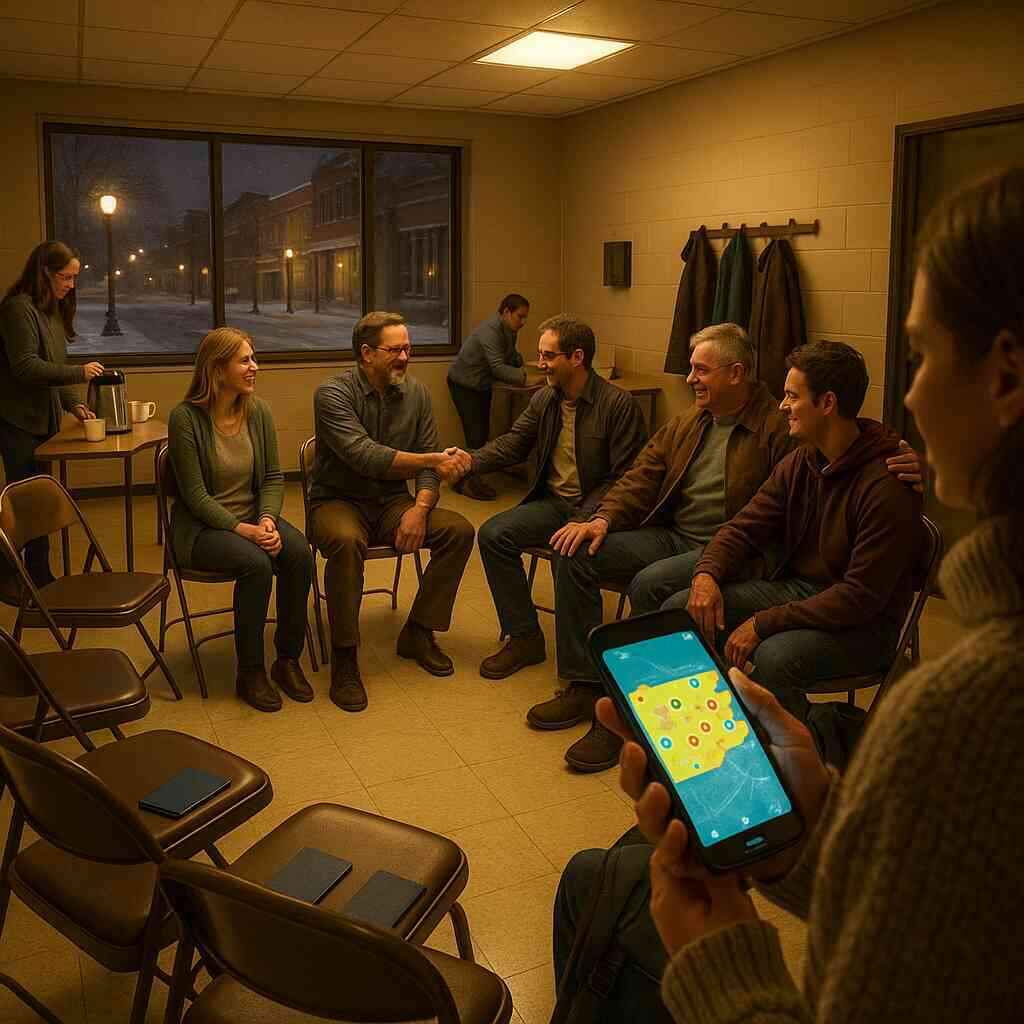
When snow blankets Pennsylvania’s valleys, temptation can sneak in like a chill wind. Festive gatherings often overflow with drinks that once felt harmless. Instead of bracing alone, residents open AA Meetings Directory and map nearby Pennsylvania alcoholics anonymous meetings before any party begins. The site’s reminders encourage packing sparkling water, an exit plan, and a sponsor’s number, reinforcing holiday sobriety tips that Pennsylvania celebrants trust. For deeper guidance, the linked resource on holiday resilience tips for Pennsylvanians in recovery expands strategies, turning each invitation into an opportunity for growth.
Winter relapse prevention PA also involves preparing the body and mind for shorter daylight. Members schedule extra virtual AA meetings in PA during dark evenings, replacing boredom with fellowship. They practice the HALT check-hungry, angry, lonely, tired-before cravings spike. Simple rituals like warm decaf coffee after shoveling snow anchor routines without alcohol. Over time, these micro-habits knit a protective quilt around even the coldest nights.
AA Meetings Directory success stories PA inspiring year-round momentum
Community testimonials illuminate how grit transforms into gratitude across the Commonwealth. One Scranton nurse attended late night AA meetings in Pennsylvania during double shifts, then shared her ninety-day milestone on the Directory’s forum. A retired Pittsburgh steelworker credits the sobriety calculator for Pennsylvania residents with visualizing progress that once felt invisible. Their stories circulate through newsletters and podcasts, fueling fresh determination among newcomers. Each account proves that AA Meetings Directory’s success stories PA stretch beyond city limits, uniting boroughs and townships in shared celebration.
These narratives also highlight adaptive strategies that carry momentum through every season. Graduates of Intensive Outpatient Programs in Pennsylvania describe continuing care with weekly meditation meetings listed on the portal. College students who first logged in from dorm rooms now lead regional speaker panels, modeling the youth alcohol recovery that Pennsylvania families admire. Veterans speak of translating battlefield discipline into daily step work, inspiring civilian peers. Collectively, their voices confirm that sober living thrives when technology and tradition operate side by side.
Charting the next milestone with the Pennsylvania 12 steps community
Progress never pauses, so goal setting remains essential after the holiday lights fade. Participants meet with sponsors to review the Guide on the 12 Steps & Traditions of recovery, then select one actionable focus. Many in the Pennsylvania 12 steps community choose Step Nine amends before spring blossoms, aligning spiritual renewal with seasonal thaw. Others commit to chairing local AA meetings that Philadelphia hosts, strengthening leadership skills along with accountability. The Directory’s calendar feature blocks time for service, preventing procrastination from derailing intent.
Mapping future achievements also means expanding fellowship beyond state lines. Members living near the Delaware River consult the AA meeting schedule in close-by Delaware for convenient weekend visits. Those commuting to Camden explore AA meeting choices in neighboring New Jersey, widening their support lattice. Cross-pollination of ideas enriches every share, reminding Pennsylvanians that recovery respects no borders. With each milestone, confidence compounds, assuring everyone that the path remains open, illuminated, and welcoming.
Frequently Asked Questions
Question: How does AA Meetings Directory keep the listings for AA Meetings in Pennsylvania accurate and trustworthy?
Answer: Our team combines automated geolocation technology with local fellowship volunteers to verify every Pennsylvania alcoholics anonymous meeting in the database. Meeting secretaries receive automated reminders to confirm times, formats, and accessibility features. Any change-whether a new wheelchair ramp in Harrisburg or a moved open speaker meeting near Pittsburgh-triggers an instant database update, so the moment you search “find AA meetings near me in PA” you receive current, reliable information you can act on with confidence.
Question: In the blog How AA Meetings Directory Redefines Sobriety in Pennsylvania, geolocation and the sobriety calculator are highlighted. How do these two tools reinforce each other during recovery?
Answer: Geolocation gets you to the next local AA meeting Philadelphia or Poconos residents need right now, while the sobriety calculator for Pennsylvania residents shows exactly how far you’ve come-down to the minute. When you arrive at an AA Meditation Meeting in Lancaster, you can share today’s milestone with your sponsor, creating a powerful loop of motivation. Seeing your sober days accrue while you physically walk into AA meetings near Pittsburgh or a virtual room in Erie locks progress into both mind and muscle memory.
Question: I work a rotating night shift in Philly. Can AA Meetings Directory really help me locate late night AA meetings in Pennsylvania schedules that fit my hours?
Answer: Absolutely. Use the time-of-day filter, choose “late night,” and the AA Meetings Directory Pennsylvania portal will instantly display local AA meetings Philadelphia offers after midnight-many within walking distance of SEPTA or with ample parking. If weather or fatigue keeps you home, just toggle the virtual AA meetings PA option for camera-optional rooms that open throughout the night. Whether you’re clocking out at 2 a.m. or 4 a.m., you’ll never be more than a few clicks away from live fellowship.
Question: Does AA Meetings Directory provide information beyond meeting schedules-like signs of alcohol withdrawal PA details or links to Intensive Outpatient Programs in Pennsylvania?
Answer: Yes. Our resource hub features clinical guides on early and severe signs of alcohol withdrawal that PA residents should know, plus direct pathways to Intensive Outpatient Programs in Pennsylvania, dual diagnosis treatment services, and top sober house listings in Pennsylvania. By integrating medical insights with the 12 steps of AA, we help you and your healthcare team build a seamless continuum of care.
Question: Winter roads can be dangerous in rural counties. Can my family join virtual AA meetings in Pennsylvania and still feel the same community found at in-person Pennsylvania alcoholics anonymous meetings?
Answer: Definitely. Our virtual meeting listings mirror the state’s diversity-speaker formats, step studies, women’s AA meetings in Pennsylvania hosts, veterans AA support groups in PA, and more. Each listing includes platform instructions and closed-captioning options. Breakout rooms and moderated chat keep shares orderly and personal, so your family can experience genuine fellowship-even when icy roads make travel impossible. Virtual rooms become an extension of the Pennsylvania 12 steps community, ensuring no storm or schedule conflict can derail your sobriety.