
January 26, 2026
Opening the Commonwealth Compass to Recovery
Why Virginia sobriety metrics matter for every newcomer
Navigating early recovery can feel like driving Skyline Drive in dense mountain fog, exciting yet disorienting. Virginia sobriety metrics give newcomers a reliable dashboard, translating abstract hopes into measurable checkpoints that illuminate the next safe turn. By tracking days dry, meeting attendance, and progression through the 12 steps of the AA journey, individuals turn vague intentions into tangible momentum. These indicators reduce anxiety because they replace guesswork with data, proving that consistent action steadily shrinks relapse risk. For many beginners who discover AA meetings in Virginia near you, seeing their metrics improve week after week fosters confidence that lasting change is genuinely possible.
Sobriety metrics also align perfectly with the AA tradition of “one day at a time” because they encourage incremental victories instead of overwhelming long-term perfection. When a newcomer tallies ninety consecutive clean days, the milestone functions like a ceremonial mile marker on the Colonial Parkway, affirming direction while beckoning forward. Family members, sponsors, and treatment professionals can celebrate these data points together, creating a supportive echo chamber that amplifies positive behavior. Moreover, data-driven recovery neutralizes shame; numbers cannot moralize, so they offer an emotionally safer mirror than personal judgment. In this way, metrics transform the recovery path from a hazy rumor to a clearly posted Commonwealth byway.
The role of AA Meetings Directory in the local recovery fabric
The AA Meetings Directory operates as an always-open welcome center, weaving individual sobriety stories into Virginia’s extensive support tapestry. Its interactive map and refined filters help residents locate daytime city gatherings, late-night rural circles, and everything between with unprecedented ease. Instead of scrolling through outdated bulletin boards, newcomers now click one resource and instantly view verified schedules, wheelchair accessibility, or child-friendly venues. This immediacy removes logistical friction, letting people devote energy to honest sharing rather than frantic planning. By acting as a digital concierge, the platform fosters continuity that keeps fragile early recovery threads from snapping under practical strain.
Beyond meeting lookups, AA Meetings Directory cultivates knowledge equity by offering explanatory articles, glossary terms, and the sobriety calculator side-by-side with listings. Such integration means users seamlessly pivot from reading about service structure to actually attending their home group’s business meeting next Tuesday. The site thus becomes a single, holistic ecosystem, elevating collective literacy in AA traditions while demystifying jargon for first-timers. As a comprehensive AA directory resource online, it anchors statewide consistency, so whether someone attends in Roanoke or Reston, they encounter familiar guidance and a shared digital home base. This architectural coherence strengthens Virginia’s recovery fabric much like reinforced stitches strengthen a beloved quilt.
From Shenandoah to Tidewater building a statewide support lattice
Virginia’s varied geography demands a recovery network as diverse as its landscapes, stretching from the Blue Ridge ridgelines to the salty inlets near Chesapeake. AA Meetings Directory meets that challenge by treating every county as equally vital, listing home-grown groups in tiny hamlets alongside bustling metropolitan assemblies. The result is a lattice of interconnected support nodes that ensures no resident must travel unrealistic distances to share, listen, and heal. Through the directory, a Harrisonburg college student can locate midday campus meetings, while a waterman on Tangier Island can find phone-based or virtual options when the ferry schedule conflicts with step work. This coverage nurtures statewide solidarity, reminding members that individual sobriety contributes to a collective Commonwealth revival.
Interstate proximity also enriches Virginia’s network, as many border communities coordinate with neighboring states to host regional workshops, speaker jams, and service events. By consulting listings that highlight joint gatherings, coastal residents might carpool to AA gatherings in North Carolina neighbor state workshops, while panhandle newcomers can cross into West Virginia for a sunrise open meeting and still be home before lunch. These cross-border connections form a resilient mesh; if one meeting temporarily closes, another lies only a short drive away, preventing isolation. The directory’s interstate links therefore function like emergency detours on I-95, ensuring continuous flow toward support regardless of local detours. In practice, this lattice helps transform Virginia from “Old Dominion” into “New Dominion,” defined by collaboration, accessibility, and enduring hope.
Quantifying Hope with Sober Metrics
Using the sobriety calculator for personalized milestones
The first numerical tool every newcomer loves is the sobriety calculator, because it transforms invisible progress into concrete victories. By entering a clean date, Virginians instantly receive days, weeks, and months tallied, giving them a private scoreboard that updates automatically. The personal sobriety milestones calculator then forecasts upcoming chip celebrations, which reduces anxiety by replacing vague anticipation with a clear countdown. Many users print the results and tape them beside mirrors, turning morning routines into quick gratitude checks. This habit cements motivation, especially during holidays when party pressures spike and data-driven reminders feel lifesaving.
Beyond raw numbers, the tool teaches pattern recognition that sharpens every Virginia sobriety metrics guide. Watching graphs climb steadily proves that small choices compound, reinforcing the AA mantra of one day at a time. Families also benefit because they can celebrate factual achievements instead of guessing how recovery feels. Sponsors describe the calculator as a bridge from emotional storytelling to measurable accountability. As weeks convert into double-digit months, many members share screenshots during group anniversaries, inspiring newcomers who still question whether lasting freedom is possible.
Tracking progress across the 12 steps of the AA journey
Sobriety length alone cannot capture spiritual growth, so tracking advancement through the 12 steps of the AA journey remains essential. Veterans suggest recording completion dates for each step, then reviewing them monthly to reveal plateaus early. Because each step tackles unique barriers, this timeline highlights emotional bottlenecks that might otherwise hide behind respectable chip counts. Newcomers who hesitate with Step Four inventories often notice stalled graphs, prompting timely conversations with sponsors before resentment festers. In this way, qualitative milestones become quantitative indicators that strengthen overall recovery resilience.
For added guidance, members bookmark the 12 steps and traditions guide on AA to cross-reference official language with personal notes. That resource clarifies common misunderstandings, ensuring that a hurried checkmark never replaces genuine internalization. Many Virginians integrate comments about each step’s impact inside journal apps, creating a living syllabus that evolves throughout sobriety. This documentation proves invaluable during service commitments because sharing step experiences feels more authentic when backed by dated reflections. Ultimately, systematic tracking turns the twelve-step recovery approach into a transparent roadmap rather than a mysterious rite.
Recognizing signs of alcohol withdrawal checklist
Accurate metrics matter most during the volatile first weeks when physical symptoms can surprise even determined individuals. A reputable withdrawal checklist provides objective criteria for deciding whether medical oversight, outpatient monitoring, or simple rest is appropriate. Early recognition prevents dangerous complications, like seizures, that may derail the entire recovery trajectory. Sponsors often review the list with sponsees to demystify bodily sensations and reduce panic. This proactive education also empowers family members, who sometimes misinterpret sweating or agitation as laziness rather than legitimate detox signals.
Accessing the alcohol withdrawal signs checklist online builds confidence because it anchors decisions in research, not rumor. Virginia clinicians frequently distribute printed versions during Intensive Outpatient Programs, reinforcing a shared language across professional and peer domains. Tracking symptom frequency alongside sobriety dates helps newcomers notice steady improvements, reinforcing hope when cravings surge. Coupling this data with AA meetings near Richmond or rural circles creates a safety net that spans both medical and spiritual spheres. Over time, the checklist evolves from a crisis tool to an educational reference, reminding members how far their bodies have healed since day one.
 Finding Your Seat in the Circle Across Virginia
 Finding Your Seat in the Circle Across Virginia
Locating AA meetings near Richmond and rural valleys
Local AA meetings near Richmond thrive in church basements, college classrooms, and bustling downtown lofts, offering newcomers several styles of sharing. Experienced greeters explain neighborhood customs quickly, so a first timer never feels lost in city traffic or group etiquette. Volunteers keep Virginia sobriety metrics guide pamphlets on hand, ensuring that every participant can track progress the same evening. Because schedules refresh frequently, members check the AA Meetings Directory calendar before commuting, avoiding closed-door surprises. Consistent attendance in these urban hubs teaches punctuality, accountability, and respect-skills that translate seamlessly into family life and employment.
Beyond the capital, winding roads lead to circles under Shenandoah pines, tobacco barns, and courthouse lawns. Farmers hauling feed can still honor step work by coordinating rides and sharing fuel costs. Mountain guides suggest coupling meetings with sunrise hikes, reinforcing gratitude while physical health rebounds. Cross-border travelers in Bristol often split weeks between Virginia groups and the nearby AA listings in the Tennessee vicinity community, doubling their exposure to solution-focused dialogue. Such geographic flexibility removes excuses, proving that sustained recovery flourishes wherever willingness drives the wheel.
Virtual AA meetings for remote counties and coastal islands
Not every resident can reach a steepled hall, especially when tidal flooding cuts roads or snow closes Blue Ridge passes. Virtual AA meetings bridge that gap, blending video streams with traditional readings to preserve ritual while embracing technology. Moderators enforce confidentiality protocols that mirror in-person guidelines, so emotional safety remains intact despite digital screens. Members log sobriety calculator data into chat threads, turning each keystroke into public accountability. Consequently, Virginians in the most isolated hollows still feel woven into the urban Virginia sobriety network.
The AA Meetings Directory blog routinely posts headset tips, security updates, and platform comparisons. Readers bookmark those AA directory blog insights 2026 articles, then adjust microphone settings before their very next session. Seniors appreciate step-by-step screenshots, while college students skim quick-start checklists between classes. This centralized knowledge prevents technology frustration from morphing into relapse risk. As mastery grows, many attendees volunteer as online hosts, multiplying statewide capacity without adding a single mile of travel.
Spanish speaking and faith based recovery programs
Virginia’s immigrant neighborhoods carve out culturally rich spaces where Spanish reflections flow beside the Serenity Prayer. Bilingual formats invite family members who might otherwise remain silent, strengthening household unity against relapse triggers. Literature tables stack dual-language Big Books next to pamphlets on measuring sober milestones in recovery, ensuring linguistic inclusion without sacrificing depth. Trusted servants report that sharing in one’s heart language accelerates Step Five honesty, because emotional nuance survives translation. Collective singing at closing often feels like spiritual armor, especially for newcomers navigating unfamiliar systems.
Faith communities of every denomination also host alcoholics anonymous meetings framed by scripture readings, meditation chants, or hymn circles. Clergy coordinate with trained sponsors to balance religious teaching and twelve-step principles, maintaining AA’s commitment to spiritual autonomy. Congregations provide transport vouchers, childcare, and potluck dinners, lowering barriers for parents. Because forgiveness narratives resonate deeply in pew settings, many participants complete moral inventories sooner. These hybrid gatherings demonstrate that recovering souls can honor both personal belief and overarching fellowship tradition.
Women veteran and young adult focused AA support groups
Gender-specific circles give women space to address trauma, motherhood, and career pressures without judgment. Facilitators highlight confidentiality in alcoholics anonymous meetings, reinforcing boundaries that empower candid storytelling. Veterans add another layer, discussing combat memories and medical discharge issues that civilian peers may overlook. These meetings often collaborate with therapists knowledgeable about the Florida Marchman Act to assist families relocating service members. By integrating military resources, sponsors ensure that sobriety plans respect both duty history and present well-being.
College campuses and art studios host young adult sobriety circles that blend modern music, open-mic shares, and meme-inspired slogans. Leaders welcome crossover attendance from the weekly Narcotics Anonymous meetings crossover in VA to address polysubstance challenges honestly. Gamified milestone boards track progress through the 12 steps of the AA journey Virginia teens find relatable. Group texts announce spontaneous coffee outings, replacing party invites with sober social alternatives. Over time, these networks transform peer pressure into peer empowerment, cultivating a generation proud to claim recovery early.
Synergizing AA Fellowship with Holistic Treatment
Intensive Outpatient Programs and NA meetings crossover support
Intensive Outpatient Programs in Virginia bridge the gap between detox and independent living while preserving daily responsibilities. Clinicians routinely encourage attendance at alcoholics anonymous meetings to reinforce coping lessons discussed in therapy groups. The AA Meetings Directory simplifies this recommendation by mapping local AA meetings near participants’ treatment centers, turning suggestions into immediate action. When clients also battle substance combinations, nearby NA Meetings offer specialized dialogue without undermining 12-step consistency. To streamline planning, counselors share the AA directory on intensive outpatient support so newcomers can view synchronized AA and NA schedules in one trusted dashboard.
Blending fellowship with clinical care multiplies protective factors because each environment reinforces the other’s language of honesty and accountability. Sponsors often coordinate ride-shares from evening therapy to late local AA meetings, demonstrating recovery prioritization through shared routines. Meanwhile, NA peers provide clarity on polysubstance triggers, which many alcohol-focused circles might overlook. This crossover builds a holistic addiction treatment services ecosystem that supports individualized needs without sacrificing program integrity. Over time, participants internalize both medical guidance and the 12 steps of AA, solidifying balanced relapse-prevention skill sets.
Top sober house recommendations within the state
Sober living residences provide structured environments where residents practice principles learned in AA meetings before returning home permanently. Virginia hosts diverse houses, from coastal cottages to mountain lodges, each upholding curfews, random screenings, and chore contracts. The AA Meetings Directory highlights Top Sober House listings near employment hubs, ensuring reliable transportation to work and local AA meetings. House managers often require weekly progress reports using the sobriety calculator, fostering measurable accountability alongside peer encouragement. Many facilities host in-house book studies, allowing residents to explore the 12 steps of AA without leaving the property.
Choosing housing aligned with personal goals demands careful research, especially for women, veterans, or young adults needing tailored support. Directory filters reveal homes offering gender-specific wings, trauma-informed staff, or veteran liaisons familiar with VA benefits. Residents can also review community notes on evening curfew enforcement, meal plans, and required meeting attendance frequency. Such transparency reduces anxiety and ensures alignment between individual expectations and house culture. Graduates frequently credit these structured environments with embedding lifelong routines that safeguard sobriety long after move-out day.
RECO Intensive and RECO Institute pathways beyond Virginia
Some Virginians seek temporary relocation for advanced therapeutic immersion, leading them to the acclaimed RECO Intensive program in Florida. This pathway integrates individual counseling, experiential therapy, and daily alcoholics anonymous meetings, weaving holistic and spiritual growth into one cohesive schedule. Participants maintain ties with Virginia sponsors through video calls, demonstrating that geographic change need not disrupt established accountability. Upon completion, the RECO Institute alumni network offers community housing and mentorship, easing the transition toward independence. These resources complement the AA Meetings Directory by extending supportive infrastructure beyond state lines.
Returning residents often describe the RECO experience as a catalytic refocus on the twelve-step recovery approach rather than a detour from it. Alumni share new coping strategies during Virginia speaker meetings, enriching the collective wisdom pool. They also model humility by resetting local service commitments, showing peers that distance treatment can deepen homegroup dedication. This cross-pollination strengthens the urban Virginia sobriety network with fresh perspectives on trauma processing, mindfulness, and creative expression. Consequently, the Commonwealth’s recovery tapestry gains vibrant threads woven from national collaboration.
Family navigation of the Marchman Act as a protective ally
Relapse risk spikes when loved ones refuse care despite clear signs of withdrawal and mounting consequences. Families sometimes explore Florida’s Marchman Act, a legal mechanism allowing compulsory assessment and stabilization for individuals in crisis. While the statute operates outside Virginia’s jurisdiction, understanding its protective philosophy empowers relatives to advocate assertively within local laws. Therapists guide families through documentation, emphasizing thorough records of alcoholics anonymous meetings missed, workplace incidents, and health emergencies. These details create compelling narratives when petitioning courts for mandated intervention elsewhere.
Parallel to legal exploration, sponsors encourage families to maintain compassionate boundaries anchored in AA principles rather than punitive anger. Regular attendance at open AA meetings near them offers firsthand understanding of recovery language and challenges. Al-Anon groups further equip relatives with communication techniques that reduce enabling behaviors. Combining informed legal strategy with empathetic fellowship involvement crafts a balanced approach that honors both safety and dignity. Ultimately, family engagement rooted in shared recovery values can transform crisis moments into pivotal turning points without sacrificing relational trust.
Sustaining Momentum on the New Dominion Trail
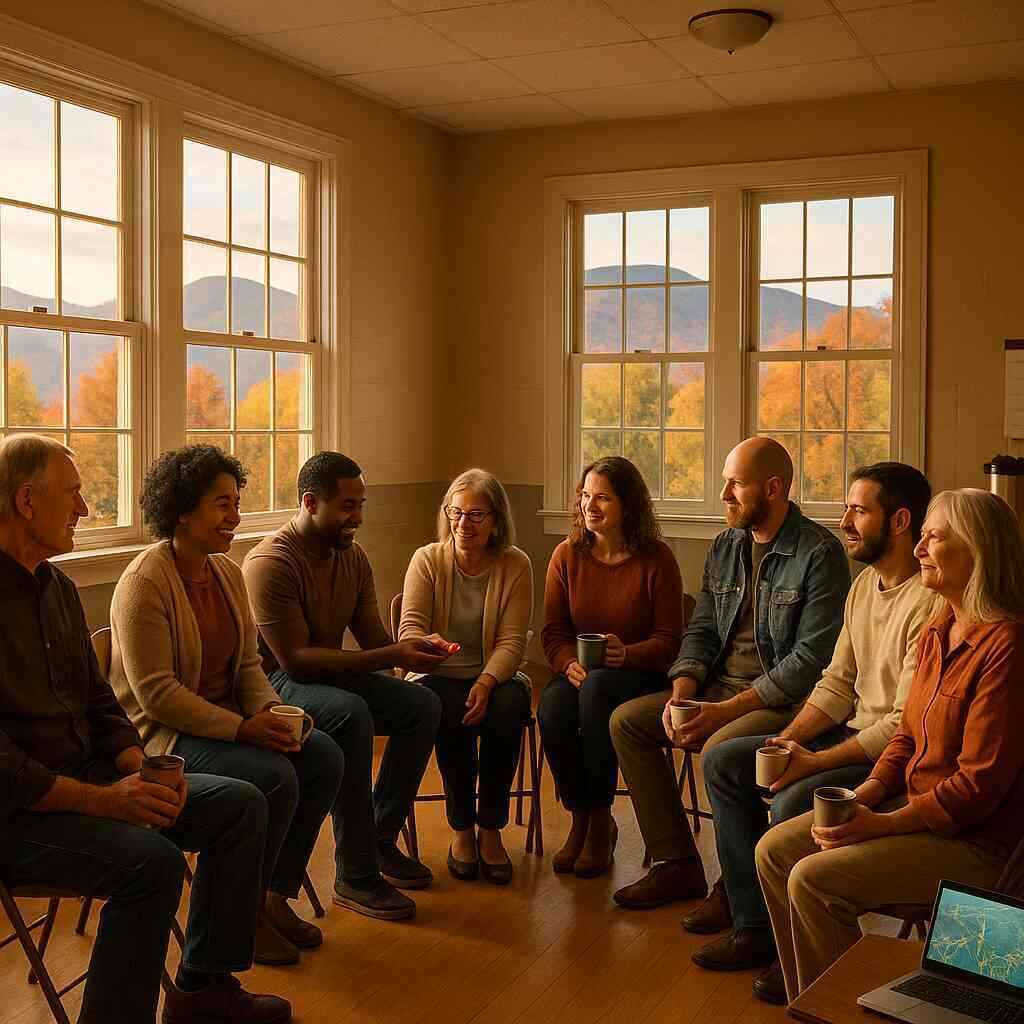 Sustaining Momentum on the New Dominion Trail
Building relapse prevention planning in AA culture
Relapse prevention planning begins long before temptation knocks on the door. AA sponsors in Virginia treat preparation as a daily discipline, not an emergency reaction. They guide newcomers through risk inventories that mirror Step Four honesty while focusing on future scenarios. Next, members craft written action maps that align vulnerable hours with rapid access to local AA meetings. Many consult the ultimate sobriety calculator guide 2026 to predict stress spikes near upcoming milestones. Because the tool visualizes progress, it also highlights weeks when complacency could threaten commitment. Sponsors encourage pairing those projections with concrete safeguards like extra meetings, literature study, or service commitments. This proactive rhythm transforms relapse prevention from fearful vigilance into confident scheduling. Consequently, planning becomes empowering rather than restrictive, reinforcing autonomy through structured choice. The process echoes Virginia’s culture of thoughtful preparation before any Blue Ridge adventure.
Effective plans stay flexible because life rarely follows a neat rehearsal. Members review strategies weekly, adjusting them as work demands, relationships, and emotions evolve. Urban commuters might swap morning meditations for audiobook speaker tapes during traffic jams. Parents often prearrange childcare with other recovering families, weaving accountability into household logistics. Crucially, every strategy channels the 12 steps of the AA journey Virginia groups cherish, especially Steps Ten and Eleven. Continuous inventory and conscious contact encourage quick course corrections, preventing minor slips from becoming full relapses. Therapists within holistic addiction treatment services VA happily integrate these peer methods into clinical relapse curricula. The shared language strengthens collaboration across medical, spiritual, and social domains. Ultimately, dynamic planning embodies AA culture by translating faith into organized, daily action.
Leveraging the urban Virginia sobriety network
Cities like Richmond, Norfolk, and Alexandria offer dense constellations of alcoholics anonymous meetings from dawn until midnight. This urban Virginia sobriety network eliminates distance barriers, allowing members to match moods with specific meeting formats. Busy professionals appreciate lunchtime literature studies, while night-shift workers rely on 24-hour clubhouses for postwork decompression. Strategic use of neighborhood options minimizes idle pockets that historically fueled drinking rituals. Because each group tracks attendance chips, members visualize momentum across multiple venues without losing accountability. Digital tools in the AA Meetings Directory synchronize these schedules, ensuring newcomers never arrive at locked doors. Sponsors often challenge sponsees to explore a new urban meeting weekly, expanding recovery perspectives. Exposure to diverse voices accelerates empathy, which research cites as a core factor for sustained change.
Service inside city districts multiplies growth because opportunities abound. Members greet at entrances, brew coffee, chair discussions, and manage digital outreach initiatives. These small tasks cultivate responsibility, mirroring workplace competencies and boosting employment confidence. Partnerships with shelters and court programs showcase AA’s practical value to civic stakeholders. When municipal leaders see reduced recidivism, they extend facility access, further expanding meeting capacity. Thus, the urban network sustains itself through virtuous collaboration between public institutions and grassroots volunteers.
Celebrating sober milestones and paying it forward
Milestones mark the journey like hand-carved trail signs along Shenandoah paths. Receiving a thirty-day chip proves that small, consistent days aggregate into life-altering momentum. Hearing applause from the circle floods the brain with healthy dopamine, rewiring reward pathways once hijacked by alcohol. Sponsors encourage journaling after each ceremony to capture gratitude before routine returns. Families often attend anniversaries, witnessing a transformation that statistics alone cannot convey.
Celebration, however, is never the endpoint inside alcoholics anonymous; it is motivation to serve. Members quickly transition from recipients to contributors by mentoring newcomers, setting up chairs, or sharing stories. Paying it forward solidifies lessons because teaching demands a deeper understanding than passive listening. Virginia groups highlight Step Twelve during birthday nights, reminding everyone that carrying the message safeguards personal sobriety. As gratitude turns outward, the Commonwealth’s lattice of hope grows stronger, welcoming the next traveler with steady hands.
Frequently Asked Questions
Question: How does the AA Meetings Directory sobriety calculator help Virginians measure sober milestones in recovery?
Answer: The sobriety calculator on AA Meetings Directory converts your clean date into real-time Virginia sobriety metrics such as total days, weeks, months, and upcoming chip anniversaries. By visualizing progress, the tool reinforces the one day at a time principle and lets you share exact milestones with sponsors, family, or Intensive Outpatient Programs in Virginia. Many newcomers tape the personalized read-out beside a mirror or screenshot it for virtual AA meetings, turning data into daily motivation. Because the calculator is integrated with meeting listings, you can immediately pair a milestone with a local AA meeting near Richmond, a rural valley circle, or a late-night online session, ensuring every victory is celebrated inside a supportive community.
Question: Where can I find local AA meetings near Richmond or virtual AA meetings if I live in a remote county?
Answer: Simply type your ZIP code or city into the AA Meetings Directory search bar and select filters such as in-person, wheelchair accessible, or virtual. For urban travelers, dozens of alcoholics anonymous meetings in Richmond appear, ranging from sunrise literature groups to midnight speaker formats. If tidewater flooding or Blue Ridge snow blocks the road, toggle to the virtual option; you’ll see secure video meetings that follow the same 12 steps of the AA journey Virginia groups honor. Each listing shows updated times, driving directions, or platform links, so you never face a locked door or broken URL. The directory also flags crossover NA meetings that support VA residents who manage polysubstance triggers.
Question: What makes the Guide to AA Meetings Directory Sober Metrics Virginia 2026 different from earlier resources?
Answer: The 2026 guide blends hard numbers with heartfelt fellowship. It introduces expanded Virginia sobriety metrics, links every step of the 12 steps of AA to trackable checkpoints, and embeds a signs of alcohol withdrawal checklist for early-stage safety. Interactive maps now highlight Spanish-speaking, veteran-focused, faith-based, and young adult sobriety circles, so you can match personal needs with specialized support groups. Cross-border icons connect residents to AA meetings in North Carolina or West Virginia when travel is easier than waiting for the next local meeting. Together, these upgrades create a statewide lattice that turns vague hope into a measurable action plan.
Question: Can AA Meetings Directory help my family coordinate intensive outpatient programs in Virginia and understand the Marchman Act?
Answer: Yes. Our resource hub lists trusted intensive outpatient programs in Virginia alongside nearby AA meetings and NA meetings crossover support VA clinicians recommend. Families can use these synchronized schedules to build balanced relapse-prevention routines that blend medical guidance with peer accountability. While the Florida Marchman Act does not apply inside the Commonwealth, our family guide to the Marchman Act explains the statute’s protective philosophy and offers tips on documenting missed meetings, workplace incidents, and withdrawal signs. Armed with this knowledge, relatives can advocate assertively within local courts or treatment systems while still honoring AA traditions of compassion and autonomy.
Question: Do you provide information on peer-led sober living houses and RECO Intensive pathways for deeper care?
Answer: Absolutely. The Top Sober House recommendations in the Virginia section showcase peer-led residences filtered by gender, veteran status, or young adult focus. Each listing details curfews, chore structures, required local AA meetings attendance, and proximity to employment hubs, making it easier to choose a home that reinforces sustainable recovery strategies Virginia residents trust. For individuals needing immersive therapy, AA Meetings Directory also outlines the RECO Intensive treatment pathway and RECO Institute alumni housing in Florida. We explain how to stay connected with Virginia sponsors during temporary relocation and integrate new coping tools upon return, ensuring continuity across every stage of your sobriety journey.