
January 12, 2026
From Coastlines to Cornfields: The Evolving Meaning of AA Meetings
Why regional voices reshape the Alcoholics Anonymous experience
Local culture always flavors recovery dialogue, allowing newcomers to hear reflections that mirror their own daily lives. In bustling neighborhoods, urban AA recovery culture leans on rapid-fire shares about career stress and commuter triggers. Rural AA support networks, however, often focus on isolation, weather challenges, and tight-knit gossip dynamics. These contrasting concerns influence how members apply the Twelve Traditions and craft personal relapse prevention strategies. Understanding cultural adaptations of Alcoholics Anonymous therefore becomes essential for sponsors guiding newcomers across state lines.
Regional storytelling also shapes vulnerability. A bilingual AA meeting may open with Spanish prayers, offering immigrant perspectives on Alcoholics Anonymous that honor heritage while embracing the universal program. Indigenous AA healing practices can weave smudging rituals into Step work, demonstrating respectful integration of tribal customs with the 12 Steps of AA wisdom. Such adaptations reinforce inclusivity without diluting principles. Members seeking these spaces can use the search tool for AA meetings near me across the U.S. to filter for language, cultural focus, and accessibility.
AA Meetings Directory resources as a nationwide compass for connection
AA Meetings Directory resources bridge city skylines and mountain passes by translating fellowship data into clear, traveler-friendly guidance. The platform highlights transportation options, child-care notes, and wheelchair details, ensuring accessibility in AA venues everywhere. It also links to addiction treatment services, sober living resources by region, and Intensive Outpatient Programs, creating a holistic compass for anyone rebuilding life. Because stigma differences in alcohol recovery persist, the site’s privacy features let users explore discreetly before stepping into unfamiliar rooms. These practical tools complement spiritual outreach, strengthening community resilience.
Beyond logistics, our directory amplifies education. Readers can dive into concise articles offering guidance on the 12 Steps and Traditions for a refreshed understanding. Comparing these writings with local meeting styles helps members see how foundational principles translate into everyday language. For example, coastal sponsorship may stress rigorous inventory, while heartland mentors emphasize patient listening. Seeing both perspectives online encourages balanced growth and decreases dogmatic friction.
How AA meetings near me become AA meetings for us in a shared recovery map
When newcomers first type “AA meetings near me,” the quest feels personal and urgent. Yet fellowship soon widens that lens, transforming solitary searches into collective navigation toward healing. Shared stories about transportation barriers remind drivers to offer rides, proving how local AA meetings’ access often relies on mutual aid. The sobriety calculator then turns individual milestones into group celebrations, reinforcing that one person’s abstinence uplifts many. Community solidarity transforms recovery from a location-based task into an expansive, interlocking support network.
Regional collaboration continues through sponsorship exchanges and service trips. A volunteer from Houston might visit Des Moines, discovering how cornfield hospitality refreshes commitment to outreach back home. Likewise, an Iowa newcomer can learn about diverse sponsorship styles through an AA meeting in Texas, highlighting diverse sponsorship styles visited arranged by their mentor. Cross-pollination like this fosters empathy, reduces cultural assumptions, and strengthens AA sponsorship across cultures. As members witness recovery flourishing everywhere, “near me” organically evolves into “for us,” uniting coastlines and cornfields in one resilient fellowship.
 The Heartland and the Horizon: Weaving Local Culture into the Twelve Steps
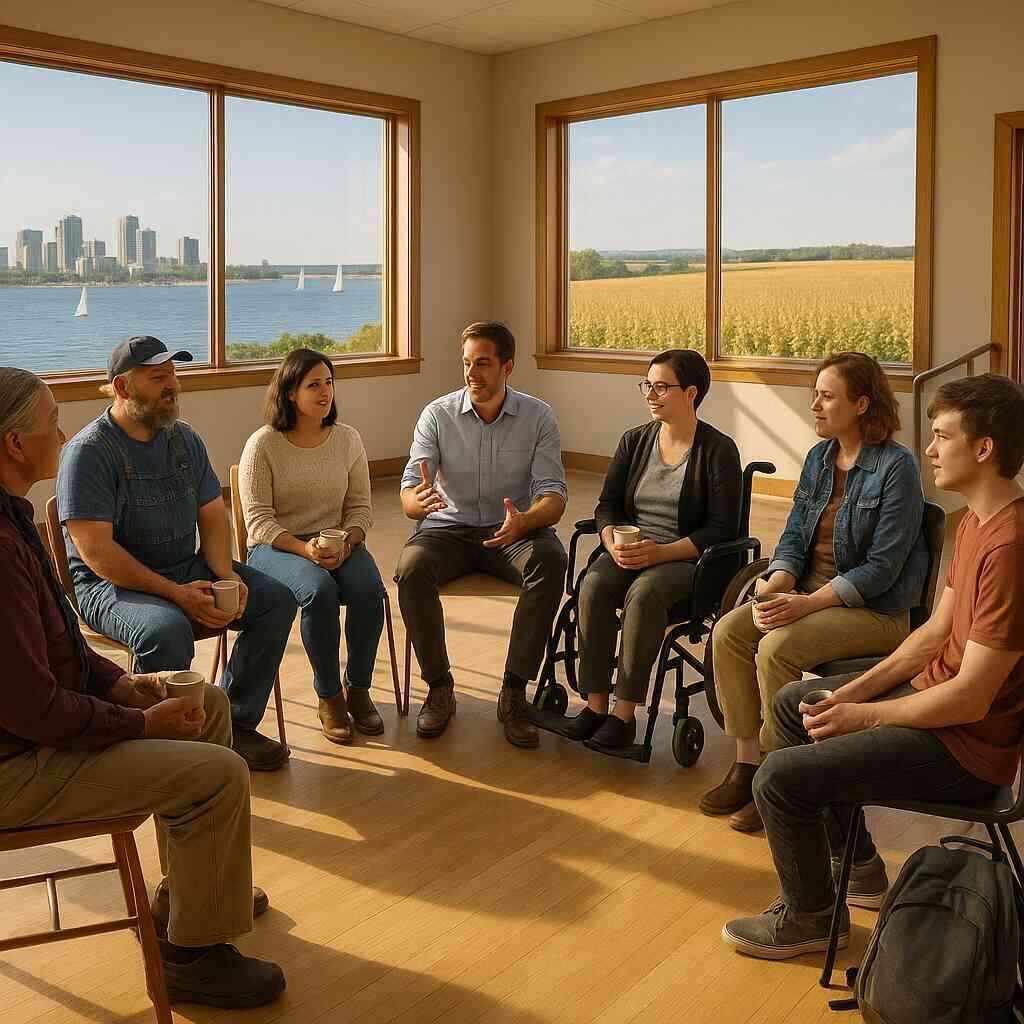 The Heartland and the Horizon: Weaving Local Culture into the Twelve Steps
Urban AA recovery culture versus rural AA support networks
City dwellers often enter Alcoholics Anonymous carrying work stress, nightlife triggers, and nonstop sensory overload. In response, urban AA recovery culture embraces rapid-fire shares that mirror subway rhythms and packed schedules. Meanwhile, rural AA support networks slow the tempo, spotlighting weather hardships, gossip cycles, and long drives between local AA meetings. Both settings honor the 12 steps of AA, yet each emphasizes different spiritual metaphors to keep members engaged. Recognizing these nuances helps sponsors translate program language so every newcomer feels seen.
Because transportation shapes participation, urban members usually find AA meetings near them within walking distance or one bus ride. Rural participants may rely on carpool chains, CB radio reminders, or post-meeting potlucks to deepen fellowship. Consequently, sponsors in farming communities stress patience when discussing signs of withdrawal, knowing medical help sits miles away. City sponsors, however, often pair newcomers with NA Meetings or Intensive Outpatient Programs available on adjacent streets. This flexible mentorship demonstrates how AA Meetings Directory resources adapt to asphalt or gravel without compromising principles.
Bilingual AA meetings and immigrant perspectives on Alcoholics Anonymous
America’s linguistic mosaic brings Spanish, Mandarin, Somali, and Creole voices into alcoholics anonymous meetings nationwide. Bilingual AA meetings start with dual-language readings, then invite shares that weave home-country memories with present-day sobriety challenges. Immigrant perspectives on Alcoholics Anonymous often highlight separation from extended family, employment hurdles, and cultural stigma around addiction treatment services. By validating these themes, bilingual circles reduce shame and accelerate trust, crucial for sustained recovery.
Sponsors working in two languages frequently integrate family immigration stress into Step Four inventories. They also guide newcomers toward AA Meetings Directory tools that list government clinics or Florida Marchman Act resources, ensuring legal clarity. When technology gaps appear, meeting secretaries print maps to AA meetings near you so elders can attend confidently. Such hospitality underlines one truth: regional interpretation of AA must honor both language and lineage to remain effective.
Integrating tribal customs with the 12 steps of AA and indigenous AA healing practices
Indigenous AA healing practices enrich the fellowship through smudging ceremonies, talking circles, and ancestral songs before Step readings. Elders may explain how spiritual inventories align with tribal storytelling about balance and reciprocity. This cultural bridge allows members to practice the Twelve Traditions while preserving sacred identity. Consequently, integrating tribal customs with the 12 steps of AA prevents assimilation fatigue and fosters genuine ownership of sobriety.
Community leaders often coordinate with local clinics to combine medically supervised detox and sweat-lodge purification. They consult AA Meetings Directory resources to locate regional sober living or Top Sober House recommendations for tribal youth returning from treatment. Because many reservations sprawl across vast landscapes, transportation solutions include shuttle vans funded by gaming revenue or church donations. These pragmatic steps prove that respect for heritage can coexist with modern relapse-prevention science.
Faith based AA variations from Southeastern fellowship traditions to the Midwest sponsorship style
In the Southeast, gospel hymns echo through church basements where AA meetings in Georgia rooted in southeastern faith traditions merge scripture with experience. Members quote Proverbs as naturally as the Big Book, reinforcing moral accountability. Conversely, Midwest sponsorship style favors potluck theology-less pulpit, more casserole-where farm families discuss grace between bites of pie. Both faith-based AA variations honor anonymity while celebrating regional spirituality.
Southeastern sponsors often use prayer circles to address resentment during Step Ten, whereas Midwestern mentors lean on storytelling about barn raisings to illustrate mutual aid. Attendees seeking either flavor can filter AA meetings nearby by denomination, thanks to AA Meetings Directory. This customization encourages newcomers who hesitate between organized religion and secular recovery to explore options without pressure. Ultimately, flexibility keeps the door wide for every seeker.
LGBTQ friendly AA meetings and community specific sponsorship
LGBTQ friendly AA meetings provide safe spaces where pronouns, dating triggers, and family estrangement can be discussed without judgment. These rooms often follow the same 12-step format but adjust readings to include inclusive language. Community-specific sponsorship then pairs newcomers with mentors who understand the intersection of sobriety and identity exploration. Such alignment reduces relapse risk caused by isolation or microaggressions.
Social events like sober Pride picnics or drag bingo fundraisers extend fellowship beyond the circle of chairs. Sponsors also share regional lists of affirming therapists, RECO Intensive outpatient groups, and RECO Institute housing. Meanwhile, AA Meetings Directory tags LGBTQ meetings clearly, so travelers can locate allies quickly. By addressing both chemical dependency and social belonging, these meetings exemplify holistic recovery.
Collegiate AA chapters and sober living resources by region
University campuses host collegiate AA chapters where students juggle exams, party culture, and first-time freedom. Meetings often occur in dorm lounges, using shorter shares to respect study schedules. Peer sponsors emphasize the consequences of binge drinking on academic standing and mental health. They also teach the sobriety calculator, converting class semesters into measurable milestone goals that resonate with students.
Housing remains a pivotal concern, so chapters partner with regional sober living communities that accept student schedules. AA Meetings Directory lists top sober house options for transitional living near major campuses, making relocation less daunting. Additionally, guidance offices link students to AA Meetings or NA Meetings when multiple substance issues arise. This synergy creates a campus safety net reinforcing both education and abstinence.
Pacific Northwest sobriety trends and accessibility in AA venues
Rainy climates and outdoor recreation define Pacific Northwest sobriety trends, influencing meeting etiquette. Sessions may begin with mindfulness moments, reflecting forest stillness before shares commence. Many rooms prioritize compostable coffee cups and bicycle racks, aligning recovery with regional sustainability ethics. Moreover, accessibility in AA venues receives strong attention, featuring ramps and ASL interpreters coordinated through district service committees.
Travelers exploring AA meetings in Oregon reflecting Pacific Northwest trends discover lakeside campfire meetings and urban loft gatherings alike. Each listing highlights weather contingencies, public transit stops, and pet-friendly policies. Such thorough details showcase how AA Meetings Directory resources empower adventurers to protect sobriety without sacrificing wanderlust. The result is a vibrant mosaic where moss-covered trailheads and tech start-ups coexist harmoniously in service of recovery.
Transportation barriers and creative local AA meetings access solutions
Transportation remains a silent relapse trigger when members cannot reach local AA meetings. Rural areas might lack buses, whereas urban riders face unreliable schedules. Communities therefore invent creative access solutions. Some churches loan vans for weekly AA road trips, while city cyclists organize “sobriety pelotons” to ride together at dawn.
Technology also bridges gaps. Phone conferences and online AA meetings supplement in-person sessions during snowstorms or car breakdowns. AA Meetings Directory integrates mapping tools showing walking distances and rideshare costs, helping newcomers budget realistically. Furthermore, volunteer drivers log mileage as service work, turning practical errands into spiritual practice. These combined strategies ensure that no one misses healing due to a broken axle or a late train.
Regional relapse prevention strategies powered by the sobriety calculator insights
Relapse patterns vary by climate, occupation, and cultural stressors; therefore, regional relapse prevention strategies must be data-driven. The sobriety calculator offered by AA Meetings Directory allows members to visualize dry spells alongside local high-risk seasons, such as harvest festivals or tourist influxes. Armed with insights, groups schedule speaker marathons before tempting events, reinforcing accountability.
Sponsors also merge calculator milestones with personalized action plans. A coastal fisherman may set alerts before months at sea, while a teacher programs reminders before summer break. The tool integrates with phone calendars so progress remains visible daily. By converting regional rhythms into measurable goals, the sobriety calculator transforms abstract time into concrete motivation, strengthening cross-border sobriety networks without adding complexity.
Beyond Geography: Forging a United Fellowship
Cross border sobriety networks and online AA meetings are working alongside local groups
Digital innovation has turned once-isolated Alcoholics Anonymous meetings into an ever-expanding, cross-border web of hope. Members who travel frequently now blend online AA meetings with local AA meetings, ensuring that the 12 steps of AA stay front-and-center no matter the zip code. This hybrid rhythm lets newcomers compare regional interpretations of AA wisdom while steadying themselves through familiar digital faces. Simultaneously, hometown circles gain fresh perspectives from visitors who drop in virtually, enriching discussions about relapse triggers unique to distant climates. As a result, people typing “AA meetings near me” discover that near can also mean a tablet screen away.
Because distance no longer dictates fellowship, sponsors encourage travelers to create contingency plans before departure. They review physical meeting lists, note time-zone differences, and bookmark phone-friendly rooms for emergencies involving signs of withdrawal. Blending both formats amplifies accountability; an absence in either space raises quick concern and prompts supportive outreach. Integrated calendars even merge sobriety calculator milestones with travel itineraries, sending alerts when anniversaries coincide with stressful trips. These safeguards illustrate how AA Meetings Directory resources transform cross-border sobriety networks into an unbreakable safety net.
Strengthening AA sponsorship across cultures for sustained recovery
Effective sponsorship thrives on shared humanity, yet cultural fluency makes that bond unshakable. Urban mentors learn rural wisdom by attending rural Wyoming perspectives on AA paths, then carry patience and storytelling finesse back to subway congregations. Conversely, heartland sponsors absorb city strategies for rapid crisis response and integrate them into farm community outreach. This exchange broadens empathy, ensuring that advice about daily inventories or prayer practices never feels tone-deaf. The result is a sponsorship matrix that flexes seamlessly across dialects, holidays, and social norms.
Language access also drives longevity in alcoholics anonymous recovery plans. Bilingual mentorship pairs encourage immigrants to process trauma in their mother tongue while learning universally accepted program terminology. LGBTQ-friendly guides normalize discussions about chosen family without diluting spiritual focus. Meanwhile, collegiate sponsors demystify career decisions alongside abstinence goals, reminding peers that professional growth and sober living can coexist. By weaving these specialties together, AA Meetings Directory proves that one dynamic fellowship can embrace countless identities without compromising principles.
Action steps to use the AA Meetings Directory for finding AA meetings near you today
First, visit the AA Meetings Directory homepage and enter your city, rural county, or campus ZIP code. The search engine immediately lists AA meetings near you, flagging details about wheelchair ramps, childcare, and language options. Next, filter by meeting type-open, closed, online, or hybrid-to personalize support and reduce scheduling conflicts. After choosing a room, click the map icon for driving or public transit directions, guaranteeing punctual arrival even when weather complicates travel. Finally, add the meeting to your digital calendar along with a sobriety calculator reminder that tracks clean time down to the second.
For ongoing reinforcement, create a free member profile and save favorite local AA meetings plus virtual backups. The dashboard aggregates NA Meetings, Intensive Outpatient Programs, and comprehensive addiction treatment services resource links, letting you build a layered defense against relapse. Weekly email summaries highlight new groups, speaker marathons, or service opportunities, so growth never stalls. If relocation looms, simply update your ZIP code and watch fresh circles populate the screen, eliminating the panic of searching unfamiliar streets. These streamlined steps turn a one-time directory visit into a lifelong compass for alcoholics anonymous success.
Frequently Asked Questions
 Frequently Asked Questions
Question: How can AA Meetings Directory help me locate culturally adapted AA Meetings, such as bilingual AA meetings or groups that integrate indigenous AA healing practices?
Answer: AA Meetings Directory was designed to surface every flavor of Alcoholics Anonymous meetings in all 50 states. After you enter your ZIP code, use the filters for language, cultural focus, or special format. You will see flags for Spanish-English bilingual AA meetings, circles that weave tribal customs with the 12 steps of AA, and even faith-based AA variations. Each listing notes accessibility in AA venues, transportation options, and contact information so you can reach out to meeting secretaries before you arrive. Our nationwide compass removes guesswork, ensuring that cultural adaptations of Alcoholics Anonymous are never more than a click away.
Question: The blog post What Does AA Mean in Diverse Regions for Recovery highlights the regional interpretation of AA. How do I use AA Meetings Directory resources to find AA meetings near me that reflect my local culture and daily stressors?
Answer: Start by typing your city or rural county into the AA Meetings Directory search bar. Our mapping tool immediately displays local AA meetings access points side-by-side with public transit routes, parking tips, and wheelchair details. Next, scan the meeting descriptions for hints of urban AA recovery culture, rural AA support networks, or Pacific Northwest sobriety trends-whatever best mirrors your life. You can also cross-reference the sobriety calculator with high-risk dates in your region to create personalized relapse-prevention strategies. By pairing these features, the Directory turns a simple search for AA meetings near you into a tailor-made recovery plan rooted in your hometown realities.
Question: I travel across state lines for work. How can I combine online AA meetings with local AA meetings so I never miss the support of the 12 steps of AA?
Answer: AA Meetings Directory plots both brick-and-mortar and online AA meetings on one dashboard. Before a trip, bookmark hybrid groups that fit your schedule, then save in-person meetings near your destination. Our time-zone converter keeps reminders accurate, and you can sync everything with the sobriety calculator so milestone alerts pop up no matter where you land. This cross-border sobriety network ensures you always have a meeting-whether that means logging onto Zoom in a hotel room or walking into a church basement two blocks away.
Question: Transportation is a big barrier where I live. What creative solutions does AA Meetings Directory recommend to reach local AA meetings and stay engaged?
Answer: After identifying your closest AA meetings in the Directory, tap the Transportation tab beneath each listing. You’ll see rideshare cost estimates, volunteer-driver phone numbers, bus schedules, and even cycling routes for the eco-minded. Many rural AA support networks also post van-pool times, while urban rooms note discounted parking garages. If weather or logistics still block access, each entry provides a direct link to companion online AA meetings so you never miss the message. Coupled with regional sobriety calculator insights, these tools let you plan ahead for storm seasons, harvest crunches, or gas-price spikes that could otherwise threaten attendance.
Question: I’m a college student who prefers LGBTQ+ friendly AA meetings. How can the sobriety calculator and other AA Meetings Directory resources support my specific recovery goals?
Answer: Filter the Directory for LGBTQ+ friendly AA meetings and collegiate AA chapters near your campus. Once you choose a group, click Add to My Meetings; the sobriety calculator will automatically track your clean time and send milestone notifications-perfect motivation during finals week. You can also store links to RECO Intensive outpatient therapy, Top Sober House listings, or other addiction treatment services right on your dashboard for quick reference. By uniting inclusive fellowship spaces with data-driven progress tracking, AA Meetings Directory helps you balance identity exploration, academic success, and long-term sobriety without ever feeling alone.